The curly hair routine guide: mastering frizz and definition

Managing curly hair is a journey, not a destination. Between humidity, environmental factors, and the natural structure of the hair, curls require a specific, intentional approach to look their best.
To help you master your curls, we sat down with two top stylists – Pashcan’el Mitchell and Mads Ruus to break down curl type, hydration, the LOC/LCO methods, and why your local water might be the hidden culprit behind your frizz.
First off let’s try and define what porosity your hair has and why is this important? Porosity matters, and for the part of the routine that actually involves product it matters more than curl type. So if curl type tells you how to style it, porosity tells you what to put on it and in what order. Let’s get into it…
Low porosity symptoms = Hair takes a long time to dry and prone to product build up meaning low absorption rate and the cuticle is closed resulting in dry hair. Use the LCO method.
Medium porosity symptoms = Hair dries in a normal length of time and holds a style meaning cuticles slightly open so moderate absorption rate. Use the LCO method.
High porosity symptoms = Hair dries quickly, gets frizzy easily and has little definition even when wet meaning high absorption rate and has trouble retaining moisture, the cuticle is open and prone to damage. Use the LOC method.


The curly hair routine with Pashcan’el Mitchell
The three-step cleanse
Frizz often begins in the shower. According to Pash, the secret to bouncy, defined curls isn’t just about what you put on at the end; it’s about how you prep the base.
The “triple shampoo”
Clarify: Start with a small amount of clarifying shampoo. This removes product buildup and environmental pollutants.
Cleanse: Follow up with a second cleansing wash. “I’m making sure our base is very clean,” Pash explains. “It allows our products to start penetrating as we work them on later on.”
Nourish: Finally, use a small amount of nourishing shampoo. “Now I’m replenishing and hydrating… I’m working on the inside of the hair.”
The treatment phase
After cleansing, apply a treatment to nourish from the inside out. Pash emphasizes that moisture is a physical sound: “Before you apply your first product, you want to make sure the hair is damp. You want to hear that ‘squish’ sound.”
The styling – LCO method
Once the hair is prepped, Pash recommends a specific layering technique to lock out humidity – LCO (Liquid, Cream, Oil):
Leave-in Conditioner: Evenly distributed for immediate softness. Pash recommends: Oway leave-in conditioner.
Curling Cream: Pash uses a small amount to enhance curl patterns.
Hold Product: To define the shape and prevent the curls from dropping.
Oil (The Sealant): “This is the part that locks in and seals in all that hydration,” says Pash. “It closes the cuticles and stops moisture from getting in to eliminate the hair expanding and getting frizz.”

Combatting hard water: The LOC method with Mads Ruus
Geography plays a massive role in hair health. Stylist Mads Ruus, based in Copenhagen, notes that environmental factors like water quality can change your entire routine.
“Here in Copenhagen, the water is even harder than London,” Mads notes. “Because of this, the LOC (Liquid, Oil, Cream) method is essential to add and lock moisture back into the hair.”
Mads’ signature routine for type 3A/3B curls:
For his client Simone, Mads utilized a layered approach to make her curls “pop” after a fresh, layered cut with a fringe:
Liquid: Using Finest Fluid to combat frizz and soften the strands.
Oil: Applying Nurturing drops to inject deep moisture.
Cream: Finishing with a high-quality curling cream (Mads recommends the Oway. Curl Combing Cream). “It makes the curls extremely soft, defined, and adds a ton of moisture.”
The finish:
To get the best results, Mads suggests scrunching the products into the hair while wet and diffuse drying to set the shape without creating friction-based frizz.
Styling by curl pattern
The right approach moves with your hair’s porosity and weight, getting lighter toward waves and heavier toward coils. So let’s get into it…
Wavy hair: Light layering (Liquid, Cream, Gel)
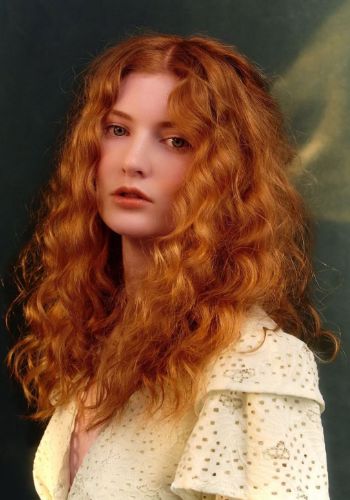

The philosophy: For fine, easily flattened waves, a light gel does the sealing work that oil does on curlier hair, locking the shape without the weight.
Why it works: Type 2 hair collapses under heavy creams and oils, going limp or greasy within hours. Layering a leave-in, a light curl cream and a gel builds a flexible, humidity-proof cast that you scrunch out once the hair is dry, leaving soft, defined waves. Careful with over conditioning and oil, if used at all, goes on the mid-lengths and ends only, and sparingly.
Best for: Type 2A to 2C, fine or low-porosity hair, and anyone whose waves drop or turn greasy when products are too rich.
Curly hair: LCO (Liquid, Cream, Oil)


The philosophy: Oil is the “Sealant.” Pash applies the Cream first to hydrate and then uses the Oil as the very last step.
Why it works: By putting the oil on last, Pash is creating a waterproof barrier. This “locks in” the cream and water already on the hair and, more importantly, prevents outside humidity from getting into the hair and causing it to frizz or expand.
Best for: People with fine to medium curls, hair that frizzes easily in humidity, or those with “normal” porosity (Type 3A to 3B).
Coily hair: LOC (Liquid, Oil, Cream), with an LCO exception


The philosophy: Oil is the “Buffer.” On thirsty, high-porosity hair, and in hard-water cities like Copenhagen where minerals leave the hair feeling brittle and dry, Mads applies the Oil before the Cream. A thin layer of oil softens the shaft and traps the liquid layer against the strand, then a rich cream provides a final layer of protection and definition.
Why it works: Type 4 hair loses moisture fast through a raised, porous cuticle. Sealing the water in early, then layering a heavy cream for weight and definition, keeps coils hydrated far longer between wash days. Switch to LCO if: Your coils lean lower-porosity (more common in 4A) or feel greasy and weighed down. Put the oil last so it seals from the outside instead.
Best for: Type 3C to 4C, high-porosity or very thirsty hair, and anyone battling hard-water dryness.
Whether you are dealing with the hard water of Copenhagen or the humidity of London, the goal is the same: working with your hair, not against it. By layering products correctly and understanding the needs of your specific curl type, you can turn “drab” or frizzy days into high-definition style.
Are you struggling with hard water buildup or persistent frizz? Visit one of our salons or Pash for a consultation, and let’s find the specific routine and products that makes your curls pop.
About the stylists…
Pashcan’el Mitchell is the lead educator for textured hair at Blue Tit London, where he oversees training across all salons in styling, cutting, and texture release techniques. He also leads the Afro & Textured Hair Course at the Blue Tit Academy, teaching stylists the fundamentals of working with textured hair. Pash is passionate about inclusivity and advocacy in premium hairdressing and strives to promote diversity and excellence in the industry through both his education and broader community work.

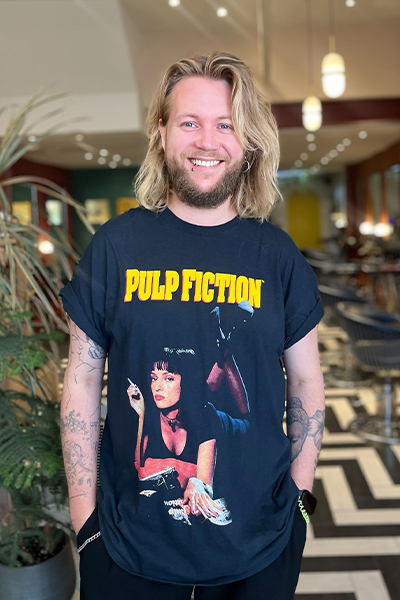
With over 17 years’ experience, Mads Ruus moved from Denmark to London to hone their technical craft – and now they’re back in Copenhagen to open their own salon.
A well-rounded stylist known for cutting, styling and colour, Mads thrives on constant evolution. As a Blue Tit London educator, they teach sustainable techniques worldwide, drawing inspiration from runways, exhibitions and their creative team.